NPS Unit Count: 80/430
US Unesco World Heritage Site: 14/24
Hey there Adventurers! I have to say I am super excited to recount the next many posts for you all! This trip in June was to check out Mesa Verde National Park in Colorado, but there are many national park sites in New Mexico including several #USBarkRangers sites, so I planned a week loop from Albuquerque to do some cool shit! I had been to far southern New Mexico once before, but I left this trip with a new found reverence for a state I didn’t really think about too much. I feel like these sites that I visited should be visited by every single American. And, I also felt like I came back with a degree in all things native southwest!
If you choose to follow this “series,” which will encompass stops to Chaco Culture, Mesa Verde, Aztec National Monument, Pecos National Historic Site, Bandelier National Monument with a short stop at Valles Caldera National Preserve, Petroglyph National Monument, Salinas Puebo Mission National Monument, and Valle de Oro National Wildlife Refuge, you, too, are going to learn about kivas, Pueblos, the Puebloans, missions, etc! Also, since at this point we all know I can be a little long winded, other than Mesa Verde, this will probably be the longest entry of the series! (and it is mostly pictures and videos!)
After I landed in Albuquerque I headed out toward Chaco Canyon and Chaco Culture National Historic site! I took a minor risk on this part of my trip. I had booked a hotel in Farmington, NM, which is all the way up near the NM/CO border, for the evening and Chaco is geographically in between, sort of, but not really, due to the lack of access. But, luckily flights and weather were on my side and I managed to make it to Chaco as planned! It should be noted that merely getting to Chaco is no small task. There is a very large chunk of North/Central New Mexico that is the middle of nowhere and that is where Chaco Canyon is. The GPS will lie to you. The website for the park says as much and they were not incorrect. I wrote down what the park said for directions, but even with that I still had to call en route to clarify. Cell phone signal does not exist, and the gps tries to do its damnedest to take you through small communities where the roads are actually not roads or are blocked off by Native communities. Once you do manage to make the right stop off the highway the NPS has done a good job with signage. But the road is remote bumpy, gravel and dirt, and there is a whole lot of nothing for 20 miles. But in any event I arrived at Chaco at about 3 PM local time.
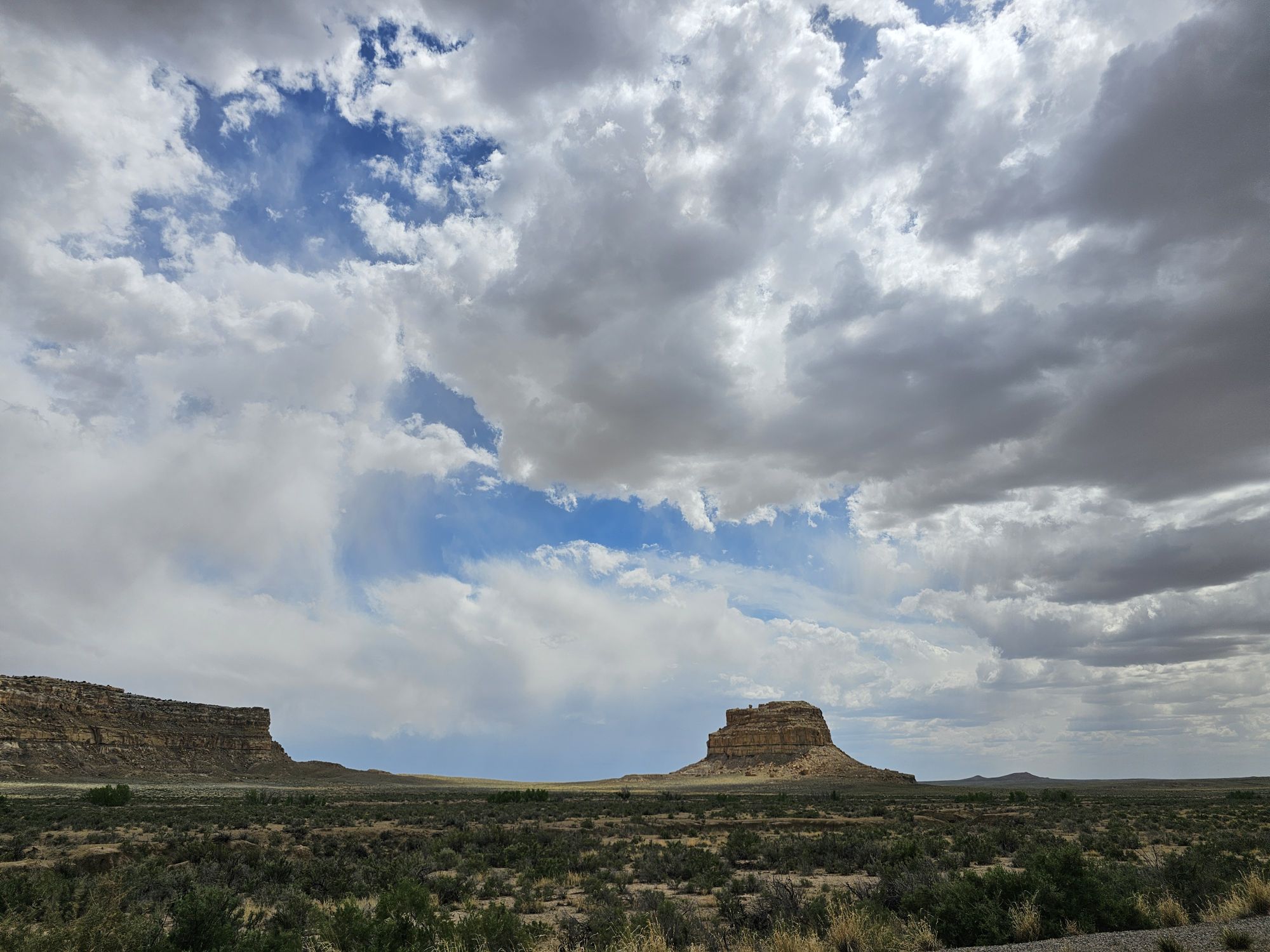
Chaco Culture Historical Park is a Unesco World Heritage Site (I am starting to rack up the US ones, so I have now added a counter for that as well!) and let me tell you…this is a very important place to visit. In fact every single one of these sites I visited on this trip are super important and encompass things that are not really taught in schools, and I think every American should visit.
I would say that the first thing everyone needs to know is that the native tribal populations in North America a thousand years ago were neither primitive, nor “savage”. The ancient Puebloans maintained a network of roads, trade and culture that extended as far as Mexico and central America during the the 800 to 1200s CE. This site does have evidence of human habitation dating back nearly 10,000 years as well! Most of what is left in these sites here at Chaco is original, with little to no restoration! Many sites are now being left unearthed to protect them for future generations and hopefully better archaeology techniques. This site is in Chaco Canyon and was the major center of the Ancient Puebloans, is one of the largest native sites north of Mexico, and is one of the most important cultural sites in the United States. The Hopi and modern day Puebloans consider this site their ancestral homelands. That is all I will share, but you could probably spend years learning about this site, so go visit and get started!
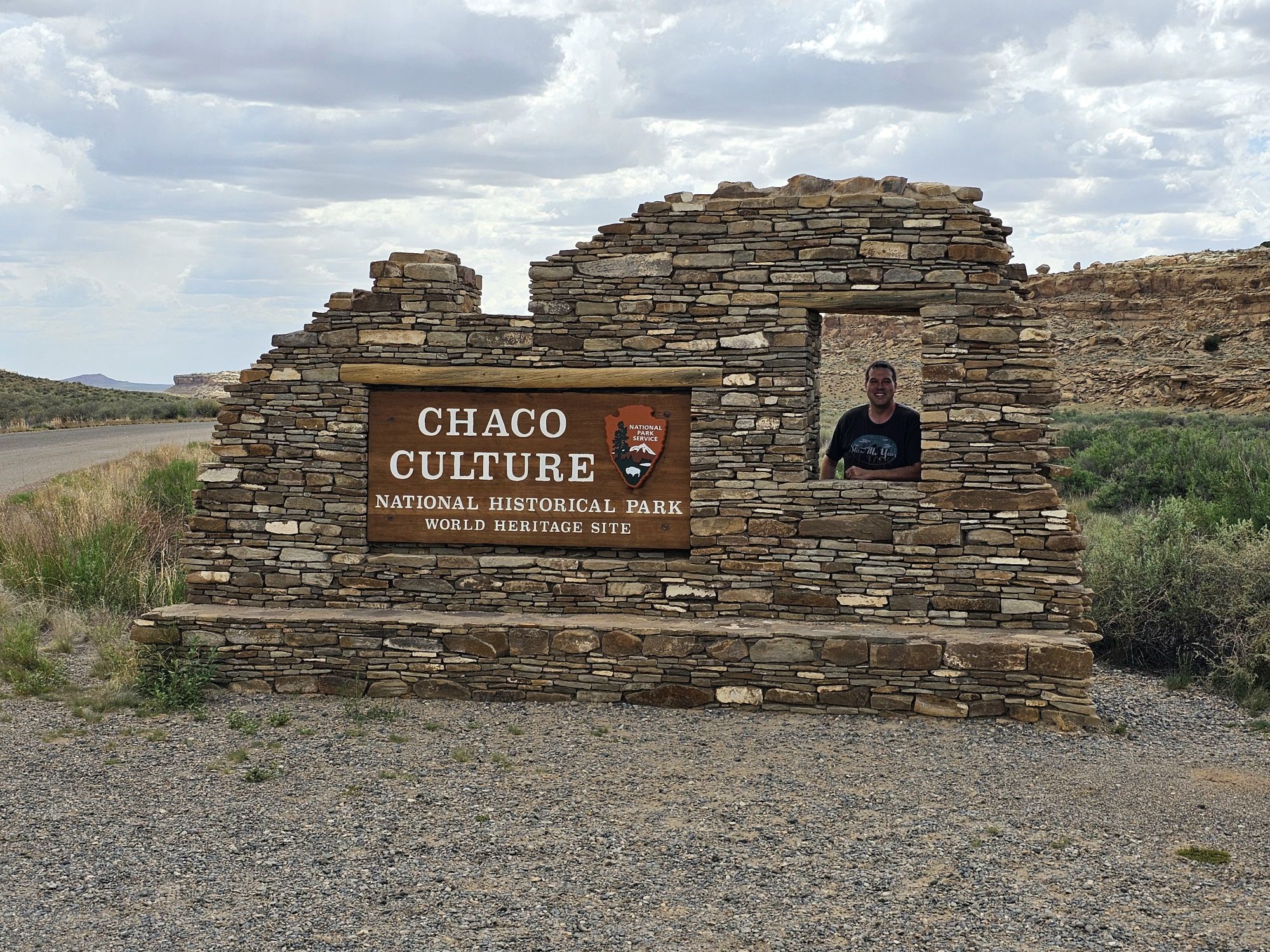
Upon entering the park area you will first pass the cool sign, then the campgrounds, then you will come to the visitor center. From the visitor center you immediately have access to hikes that go to some of the ancient ruins as well as ancient petroglyphs. Pretty cool! This area is called Una Vida and I was quite impressed with this area by itself! This is high desert, so altitude, water and exposure are the prime concerns for safety. Upon leaving the visitor center the road through the park is a several mile loop that stops at several key sites.
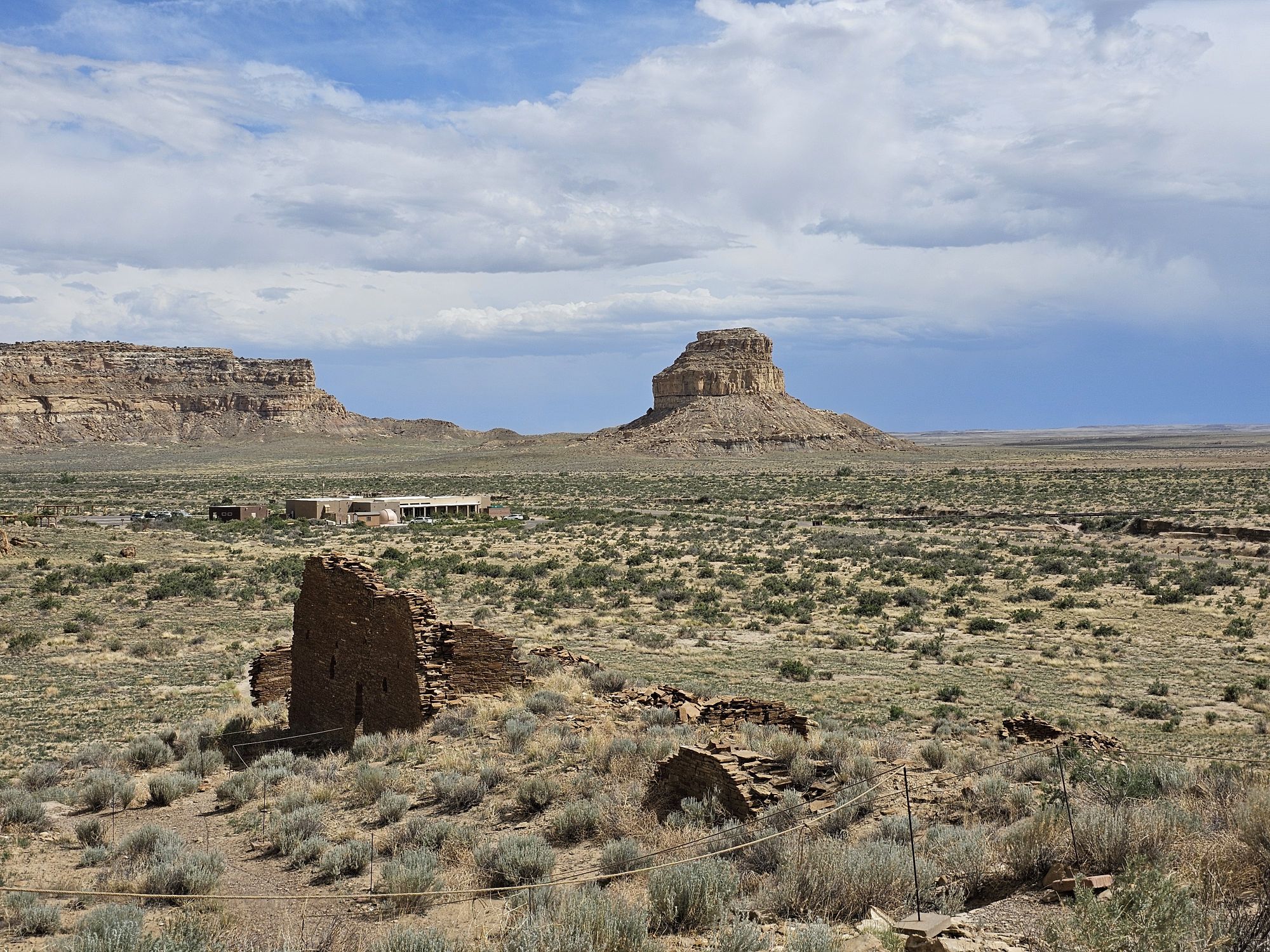
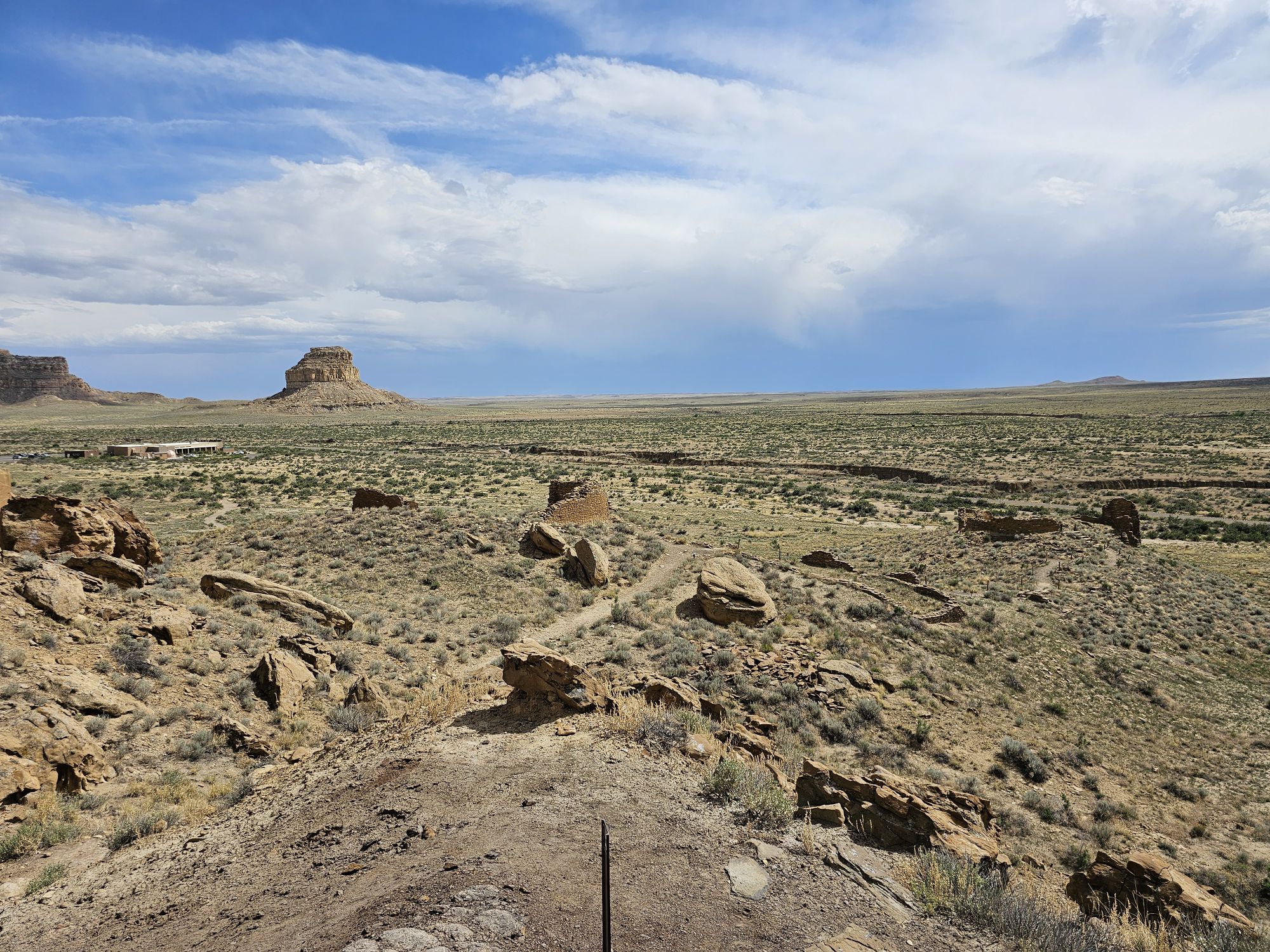
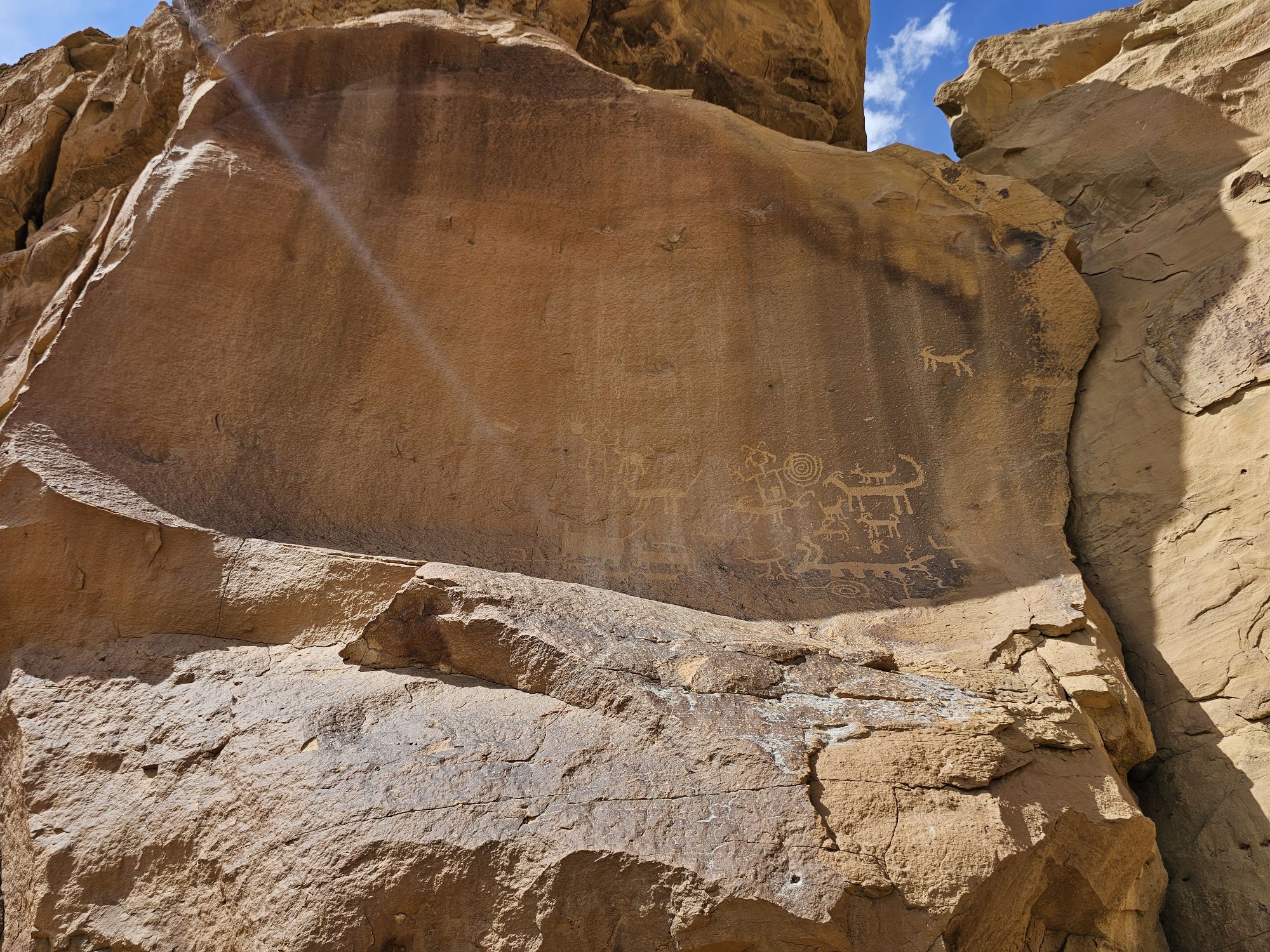
At some point on this stop I realized that I was woefully unprepared for the educational side of things that this site was going to provide (and, indeed, ALL of the sites to come!). I had no idea what the hell a kiva was. I had a vague generalization of what pueblo meant, and I had no idea about the connection of all of these peoples throughout the now southwest US. Puebloans are basically people who use bricks with mud (no small feat considering the desert environment) to created their villages. And yes this is an obscene generalization, but that’s how I can most succinctly characterize these people. They all spoke/speak a similar type of language but it’s not exactly the same. Their descendants are still actively participating in the Pueblo culture in the Southwest. A “kiva’ is a sacred community center that is usually built into the ground, is round or square, has a roof that is able to support people actively doing people things on top. The entrance is through a ladder from a hole in the top and there is fire inside the kiva where the smoke is diverted up and out of the same hole in the ceiling by means of rocks set up to do this job. If you watch any of my videos, you can tell that I was ignorant because I reference the big round holes in the ground as pits, and I even speculate as to whether they were grain or water storage! Oops! I had no idea of any of this going out on this trip. Bad me. I got lazy, didn’t research, and didn’t know what I was getting into!
In any event, the surviving ruins here at Chaco are amazing in size and complexity. After checking out the sites near the visitor center I headed further into the park. I was amazed at the extent of the preservation of the sites and the limited work the NPS has had to do to preserve these sites. I was also surprised at how accessible the sites are. You are allowed to walk into the ruins, through the doorways, and if you aren’t watching your step you could fall into the kivas! (don’t do that!) Most of the large sites are along the north side of the loop. The first stop is called Hungo Pavi . This is an unexcavated site that contains a Great House with 150 rooms (yes 150), a great kiva and a plaza. What unexcavated means is that the ruins are still partially covered by wind blown sand and vegetation, which actually protects the site. The policy of not excavating would come up more at Mesa Verde and was surprising to my ignorant self.
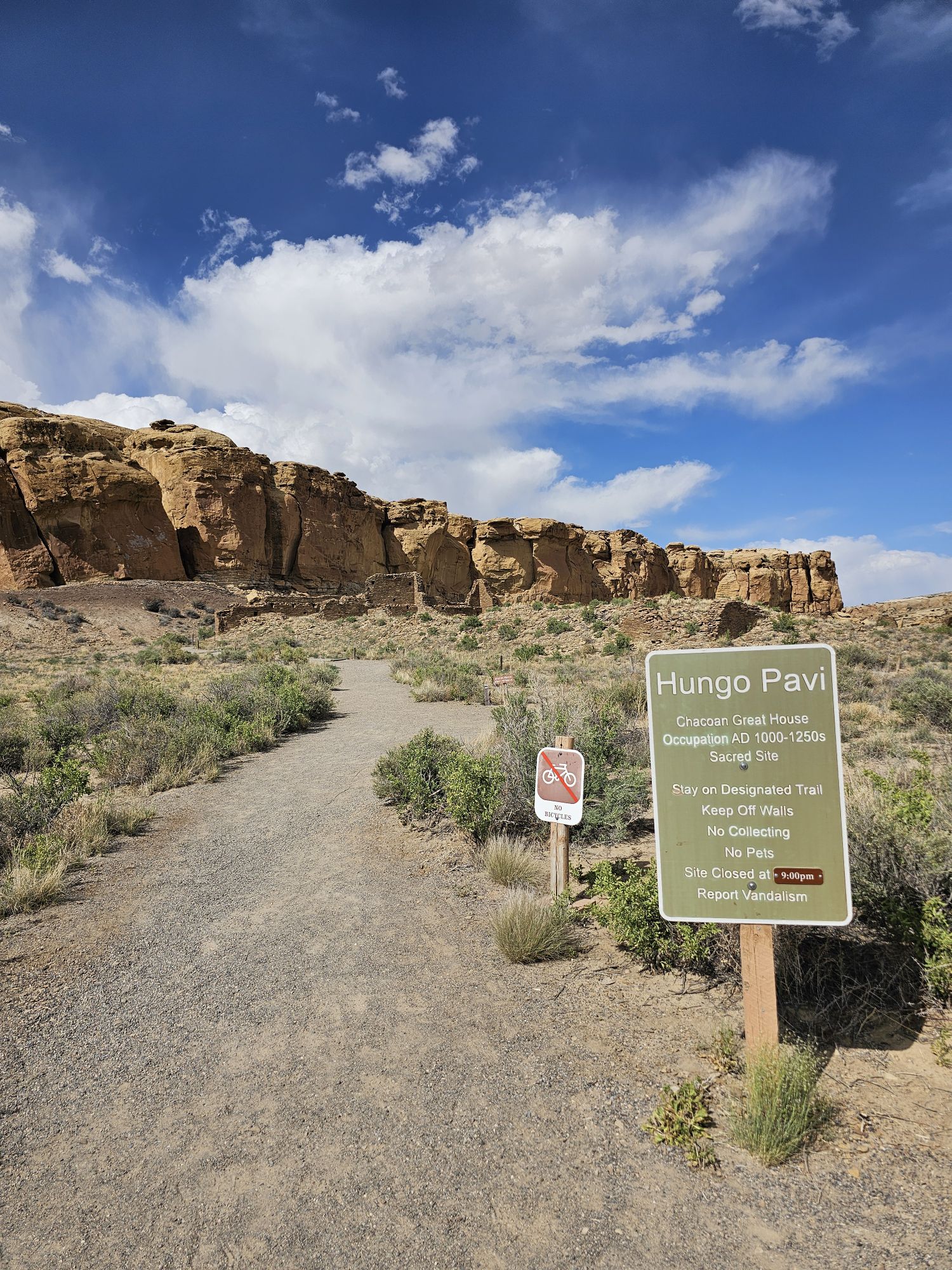
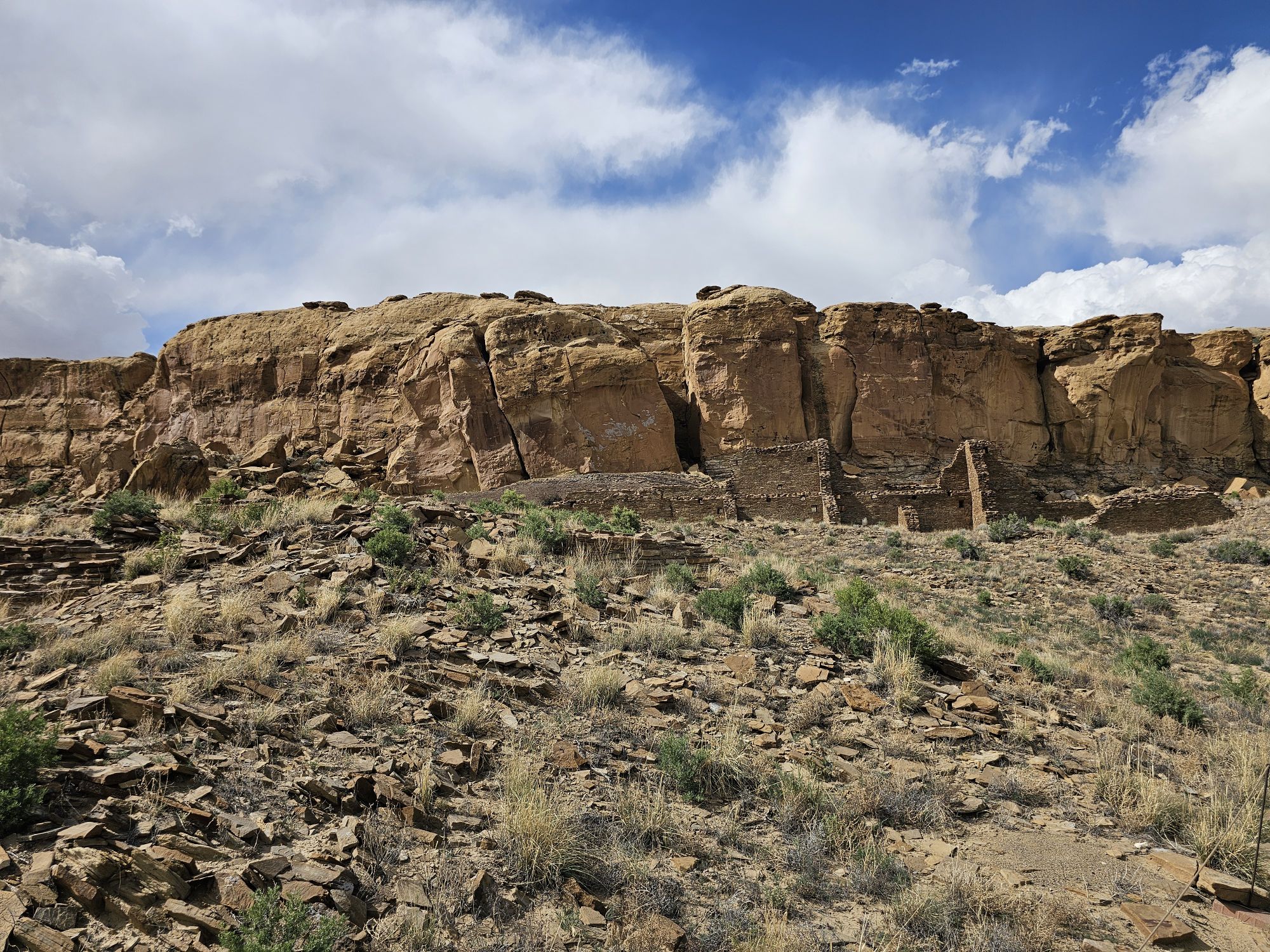
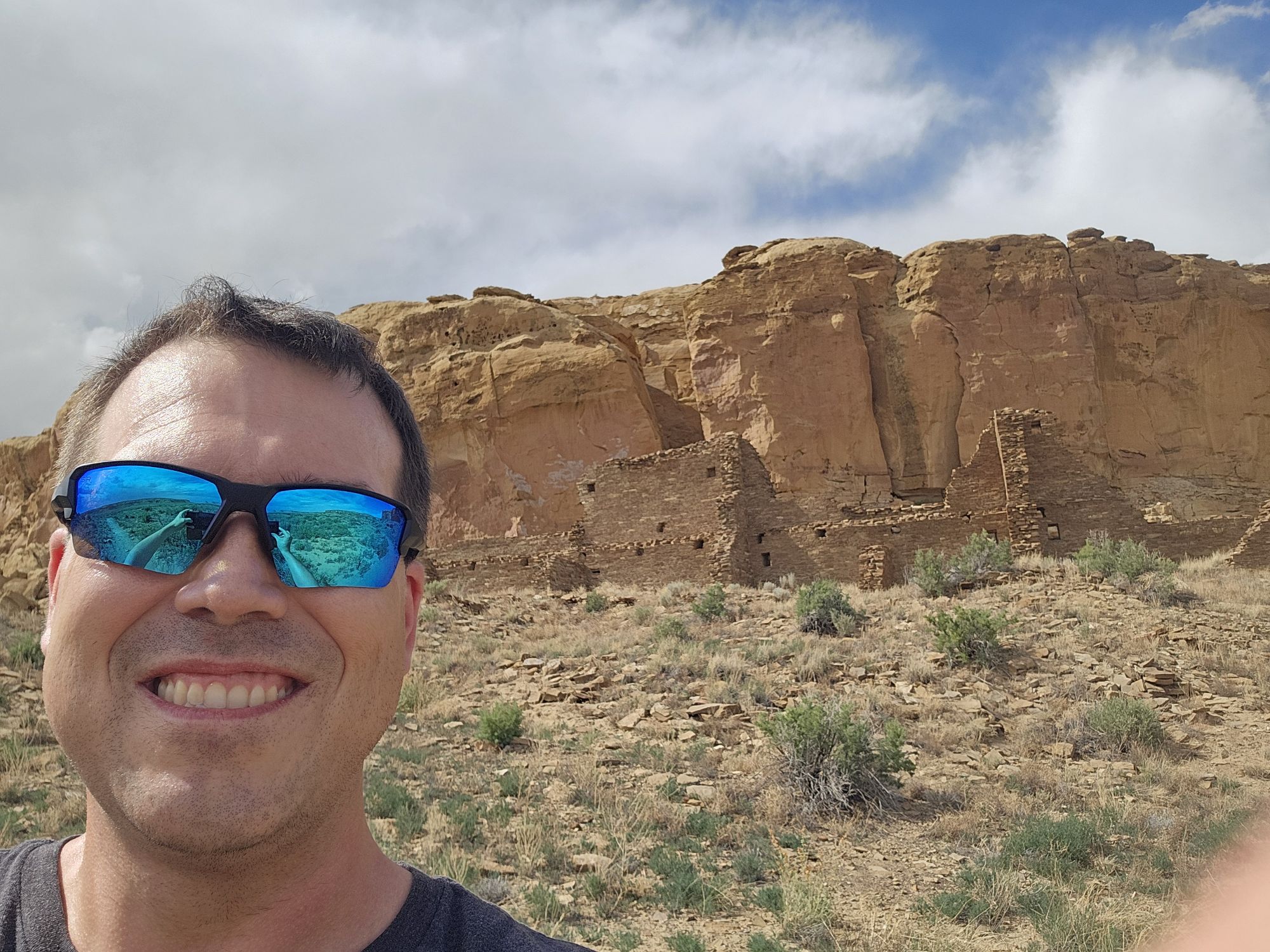
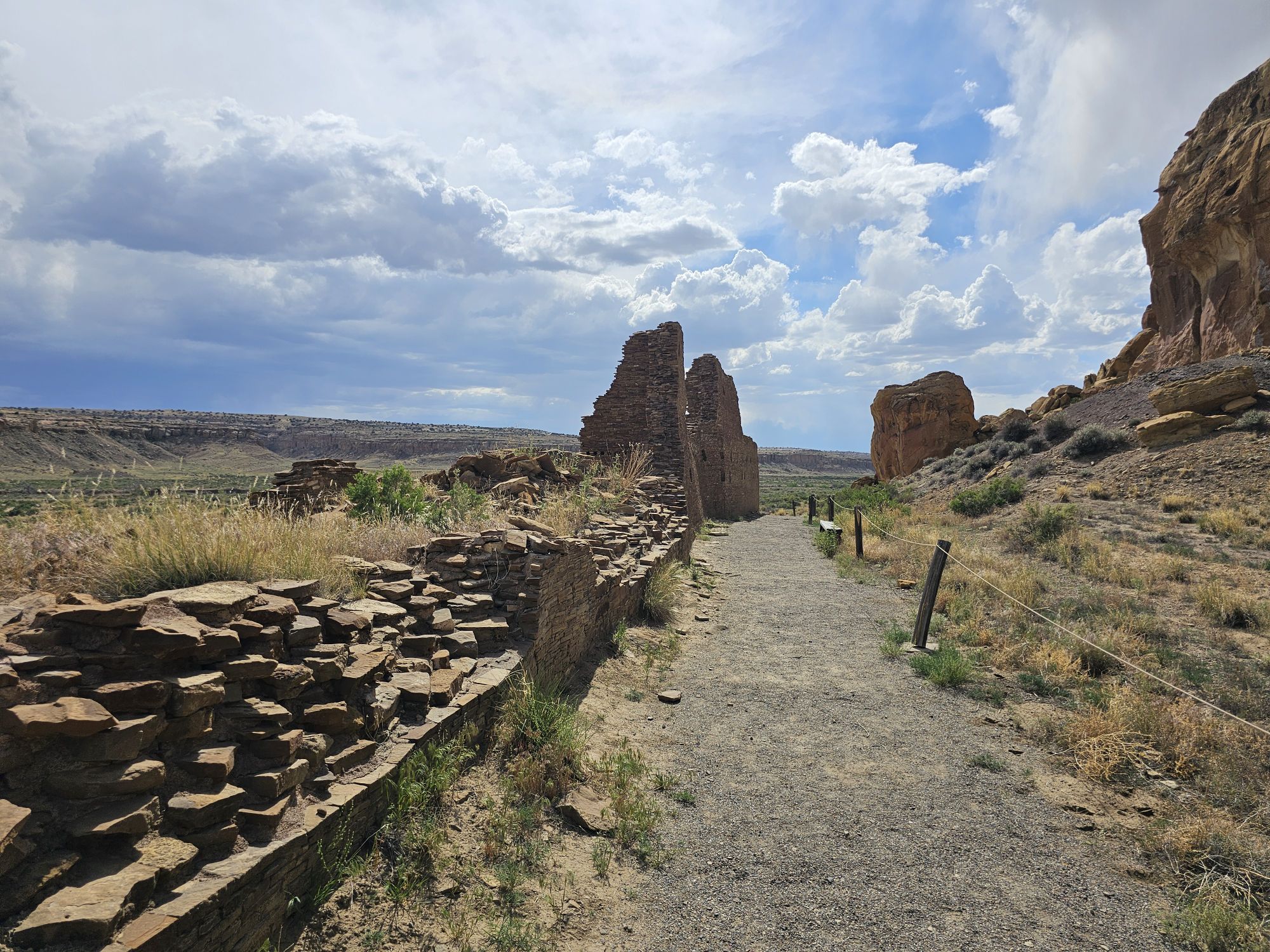
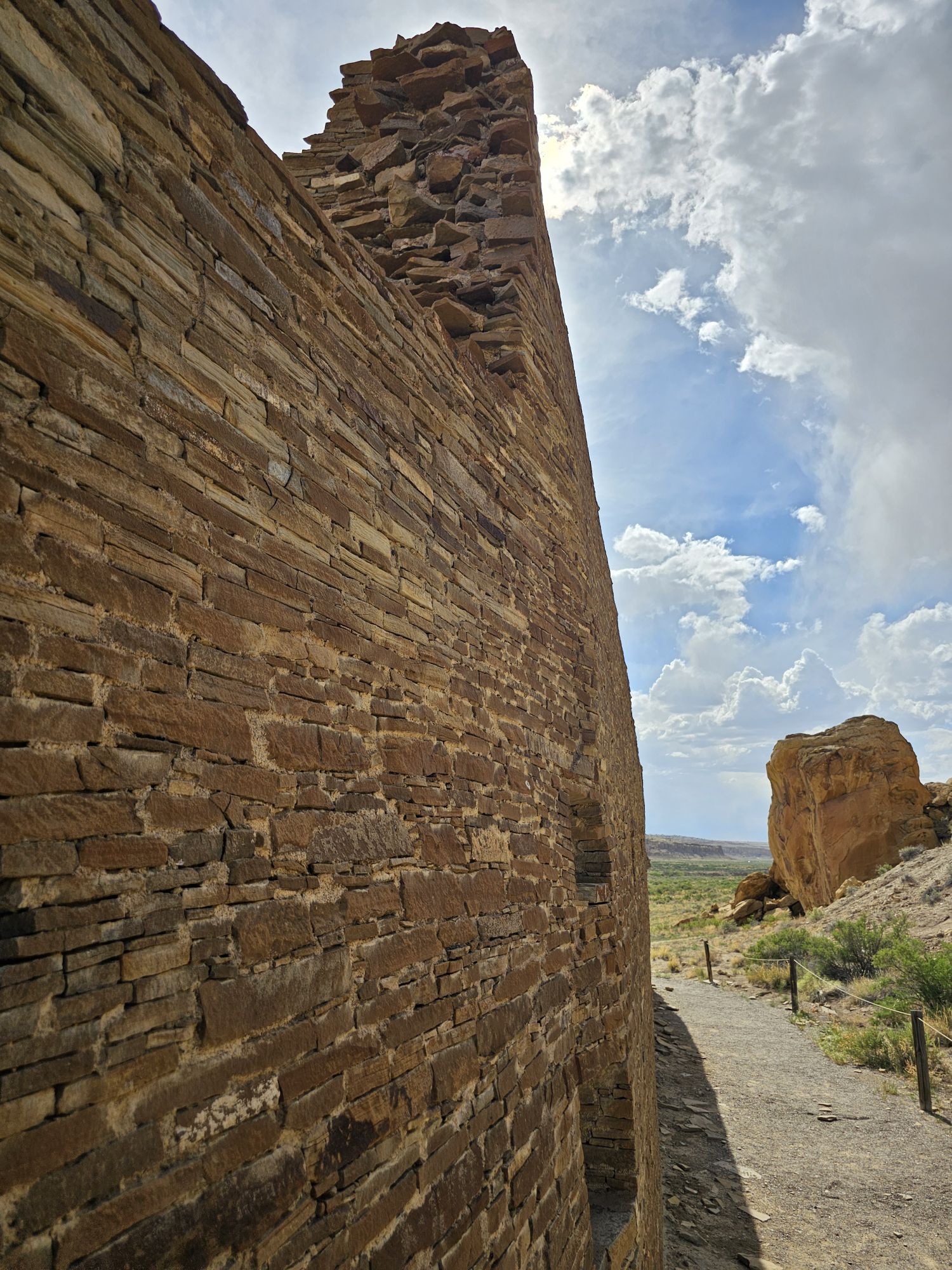
The next stop is Chetro Ketl which is the 2nd largest Great House here and included a 2nd and a 3rd storey. To get to Chetro Ketl one takes a path from the parking lot to the right, and if you go to the left you arrive at Pueblo Bonito. Chetro Ketl was a step up from Hungo Pavi and super impressive. But despite the impressiveness of Hungo Pavi and Chetro Ketl, well, Pueblo Bonito is why people come here. This pueblo is huge. It was the most important site here with 800 rooms. The site was built between 850 and 1150 CE and was the center of the Chacoan world. Cacao from 1200 miles away in Mexico has been found in jars in the site. Unforunately, the weather started to look suspect and the wind really picked up, so I decided to expedite.
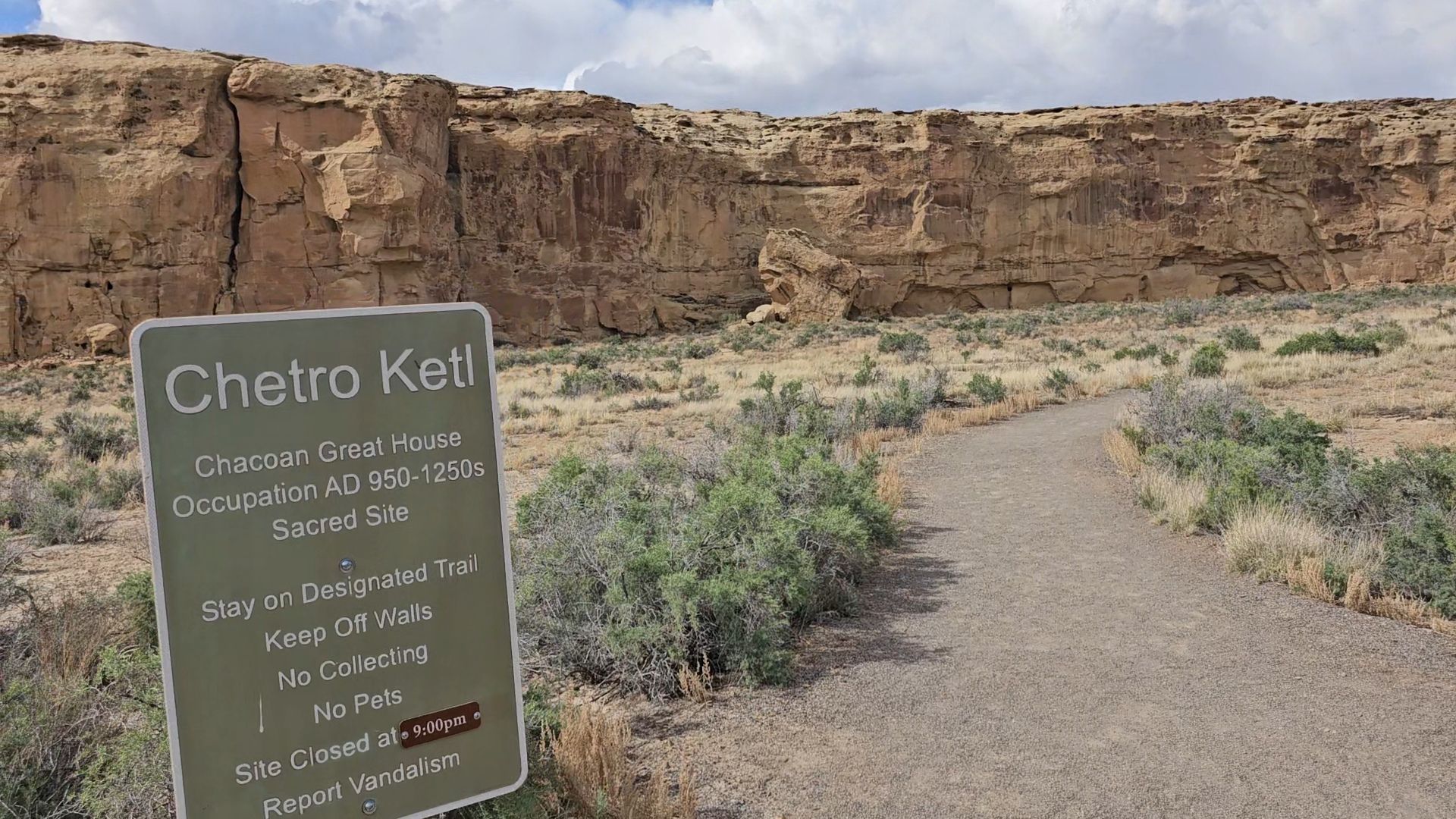
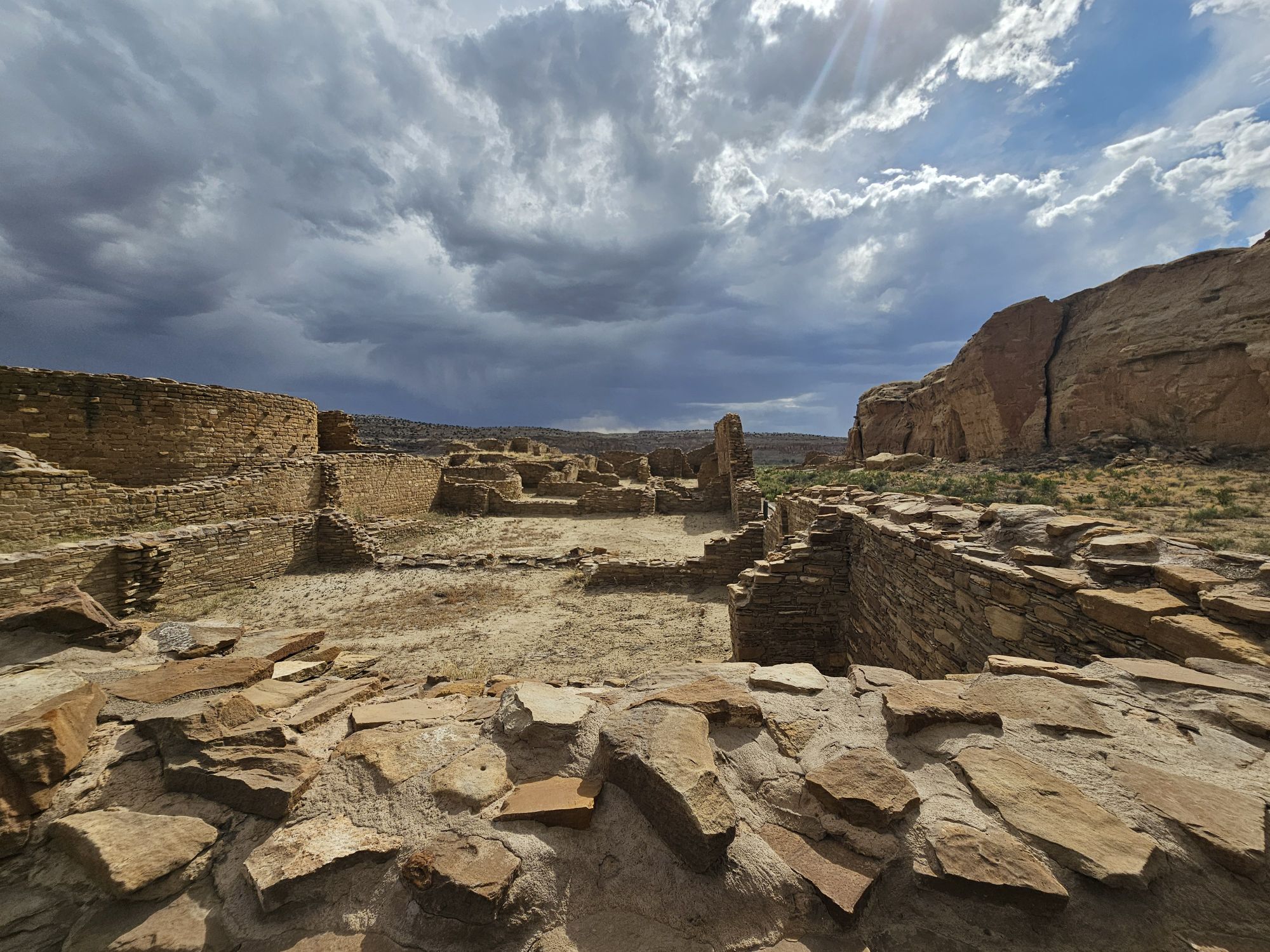
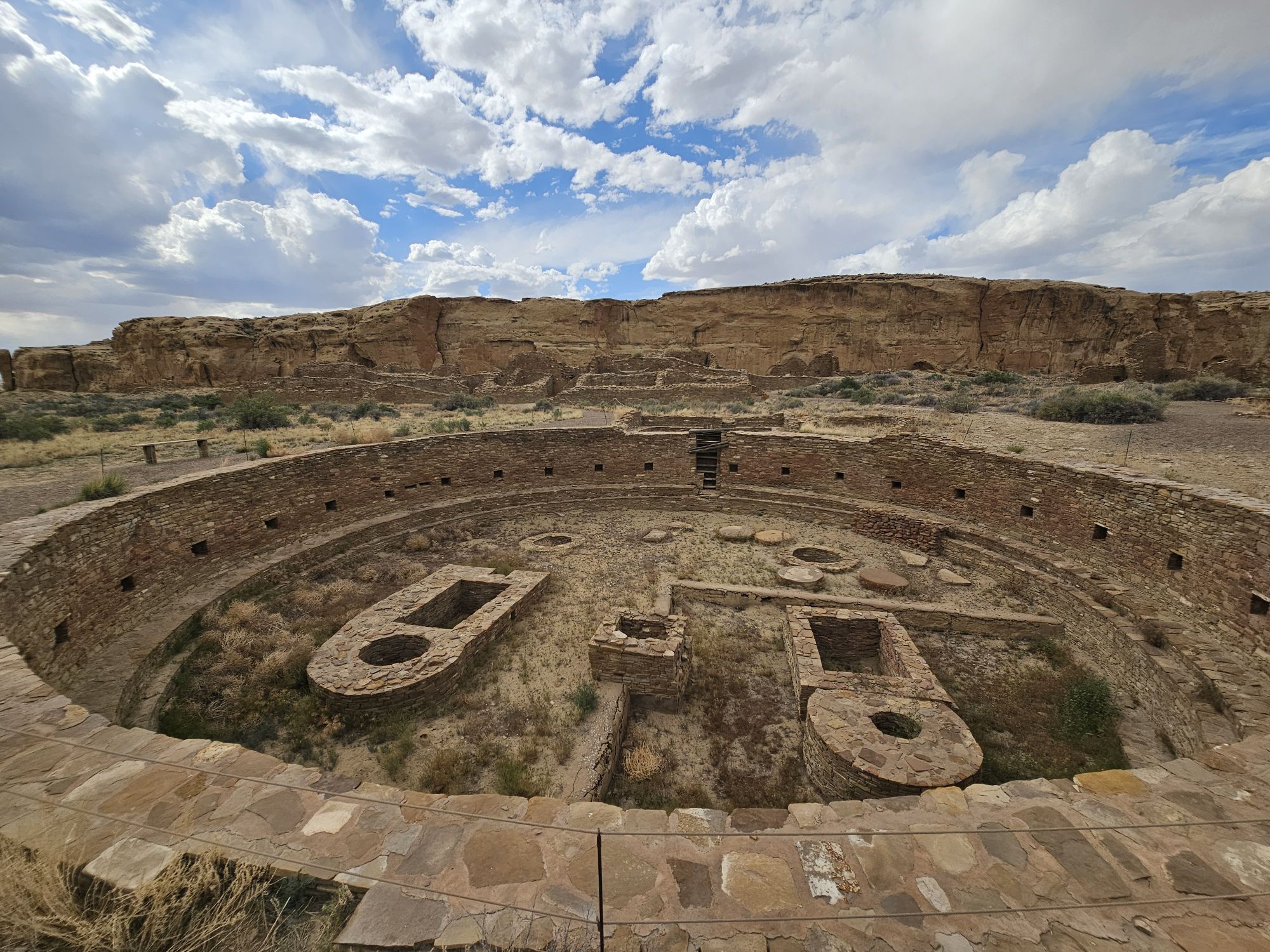
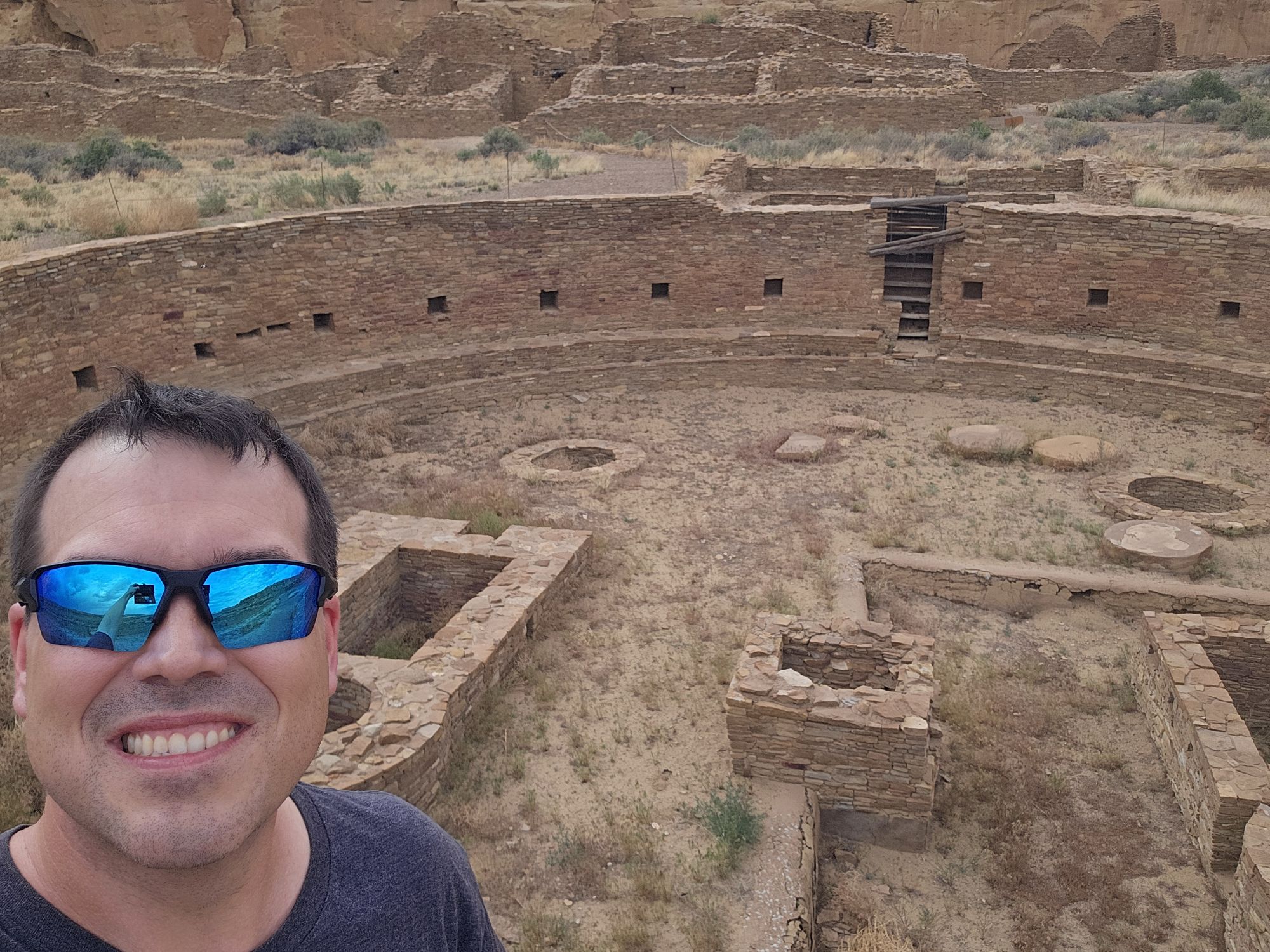
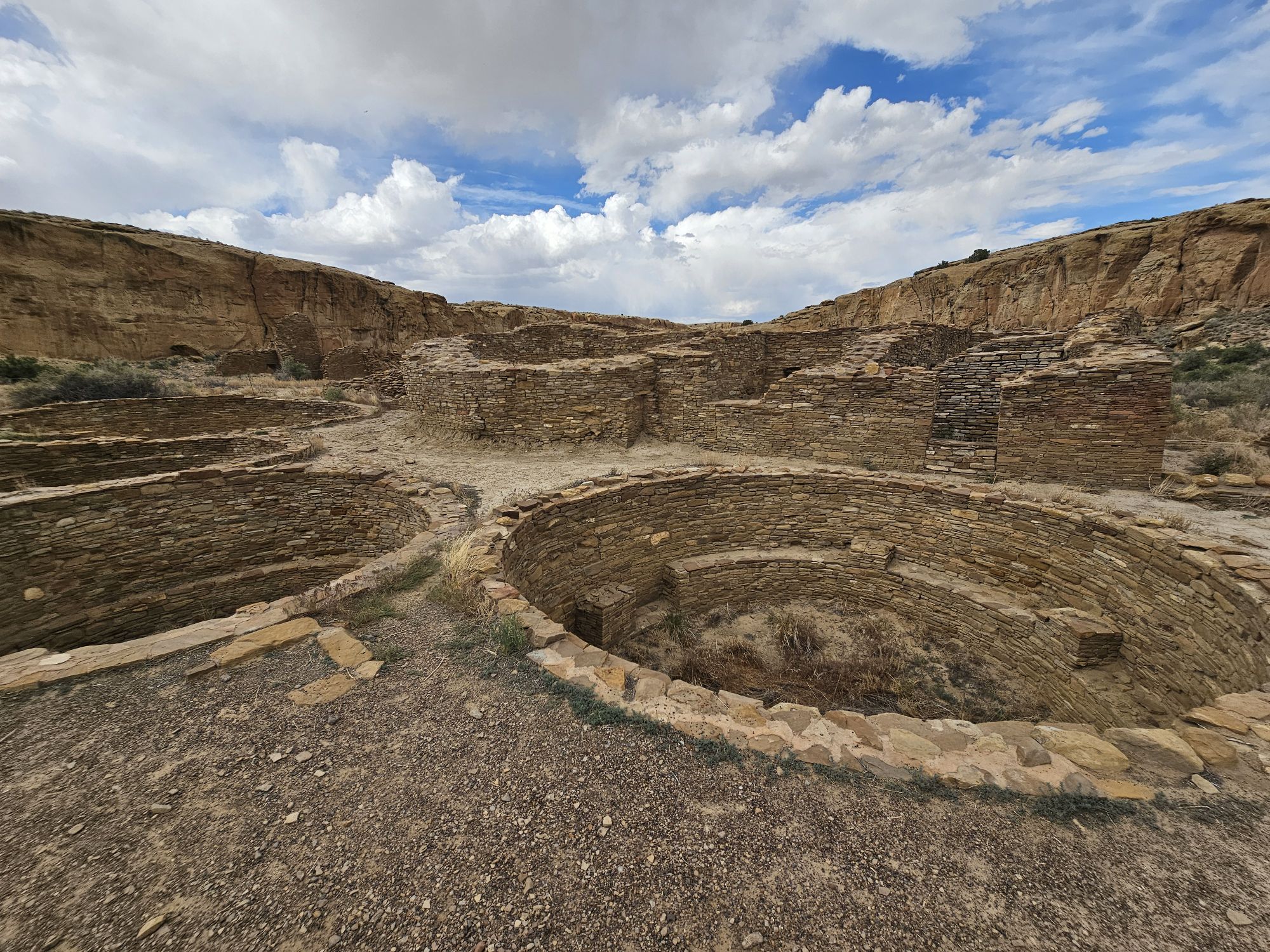
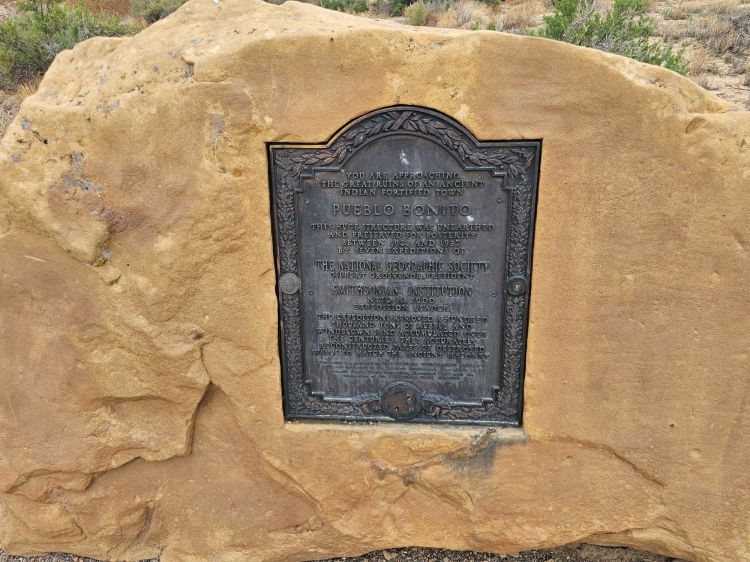
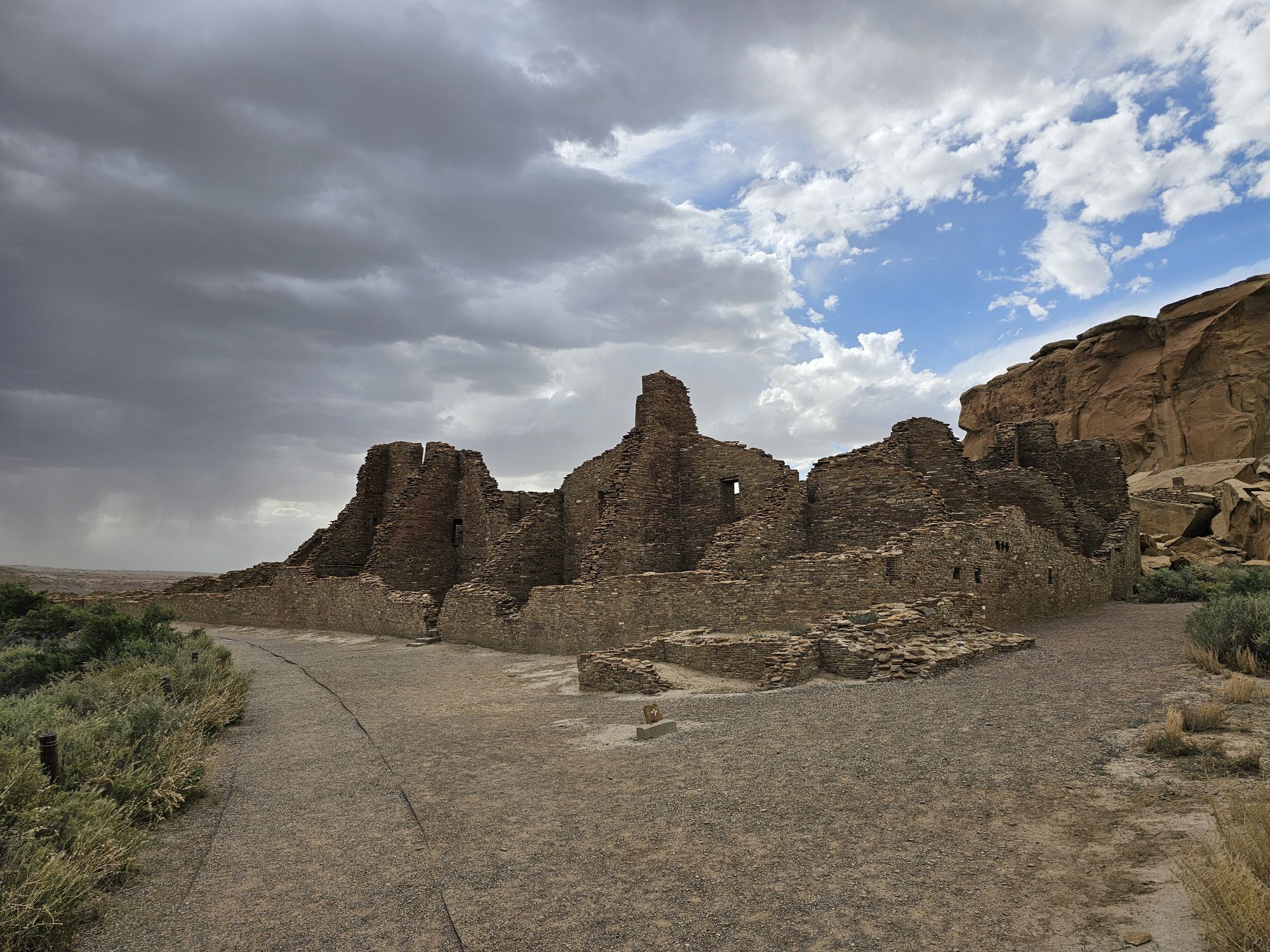
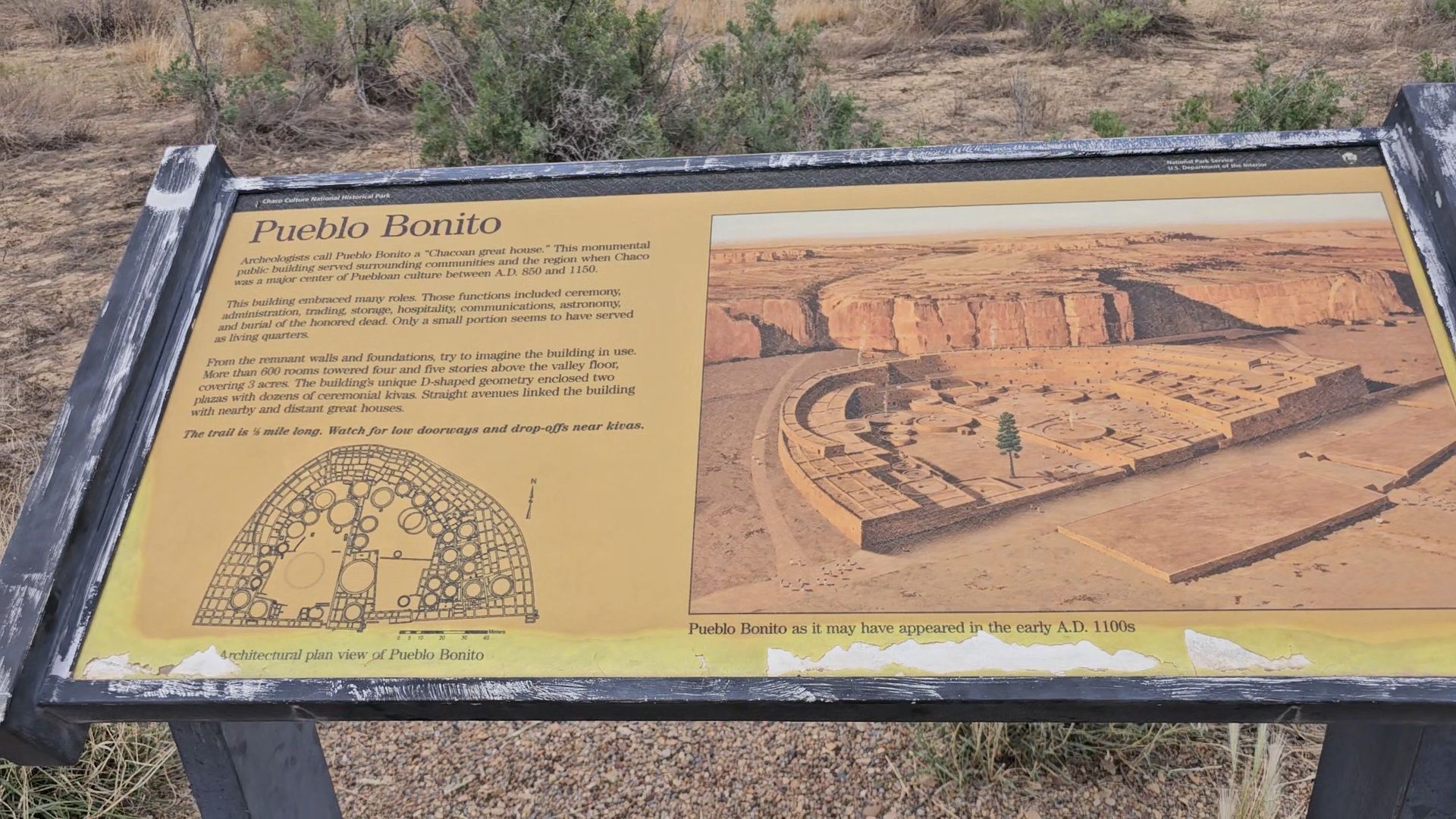
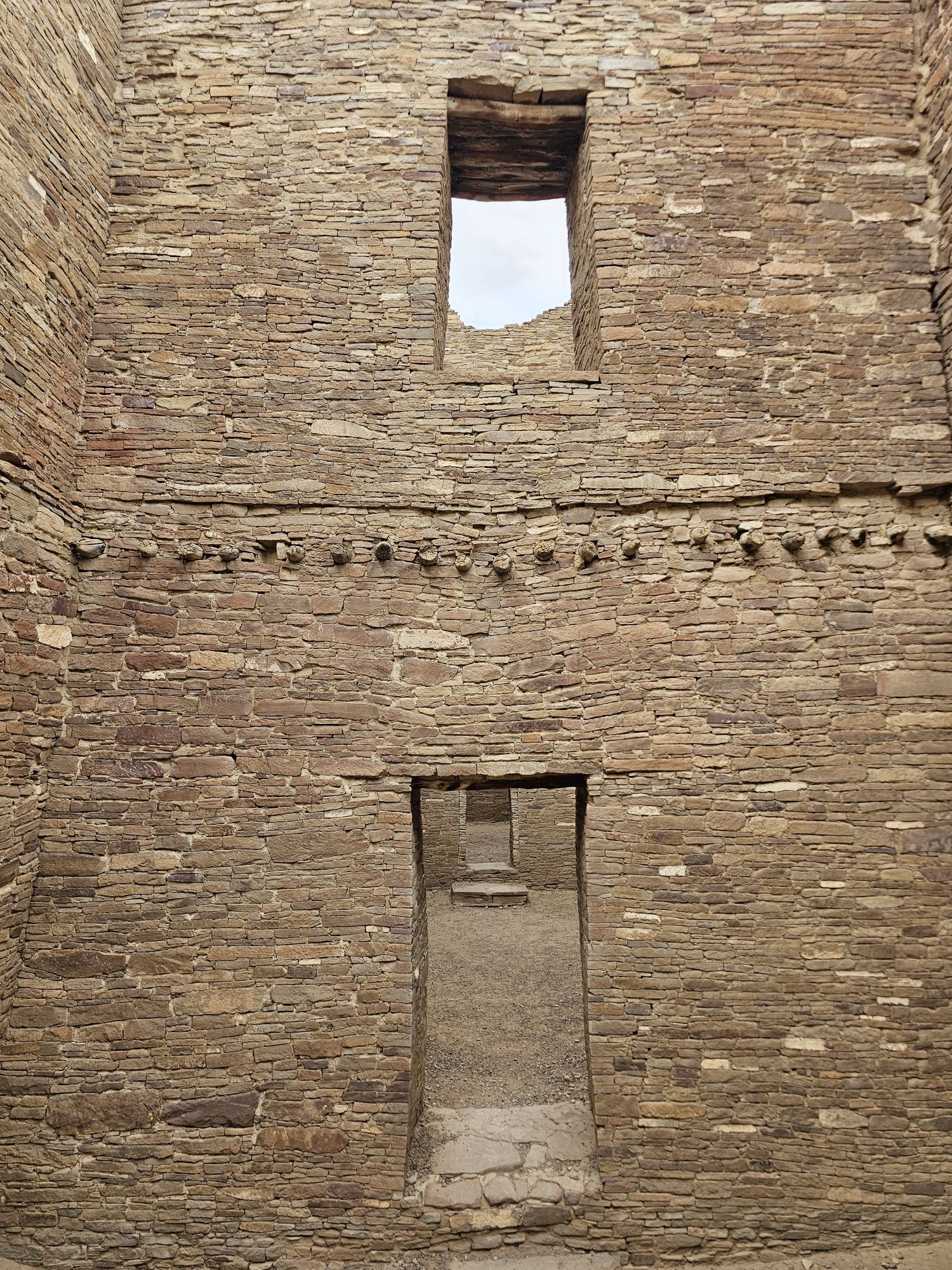
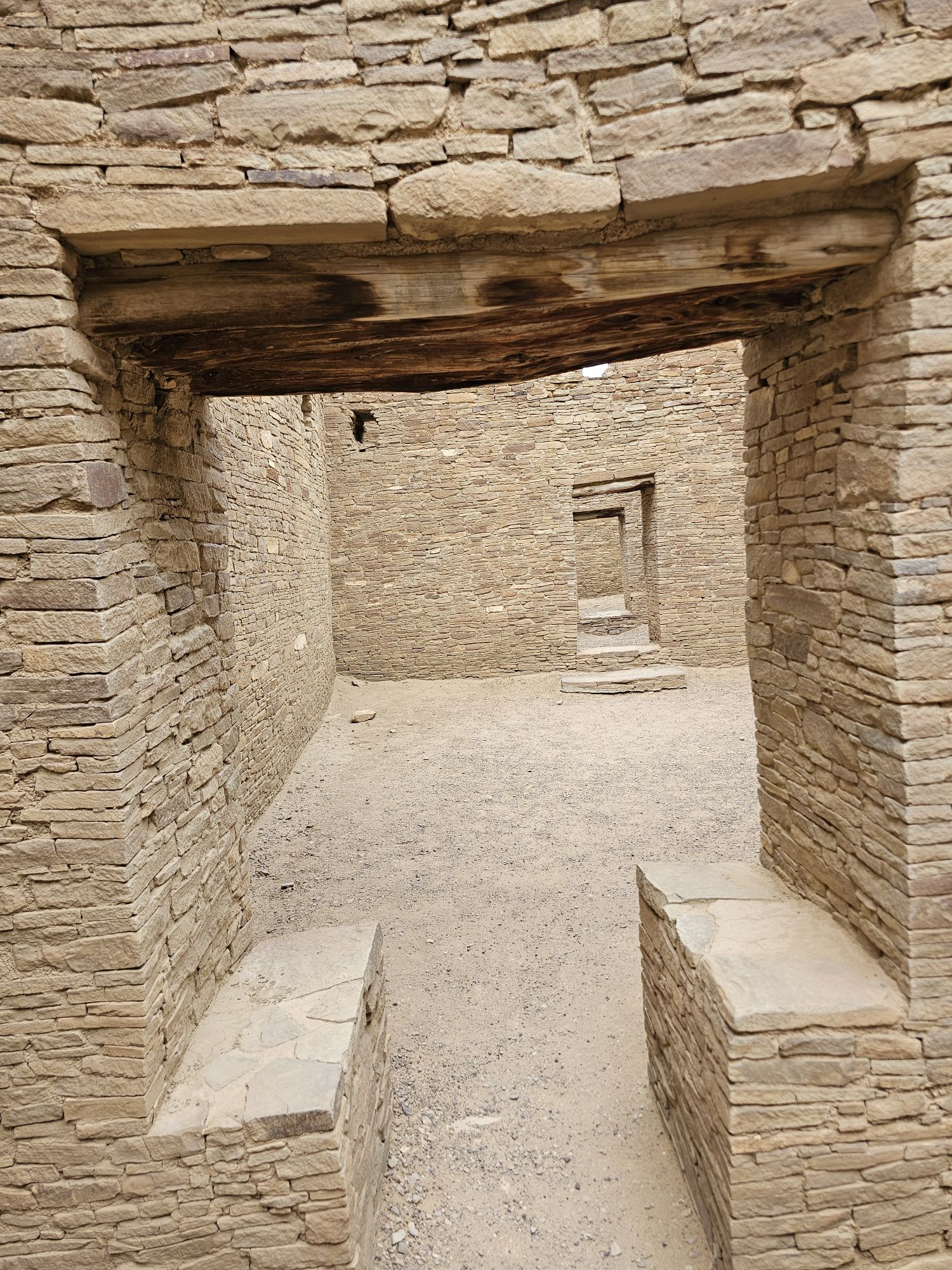
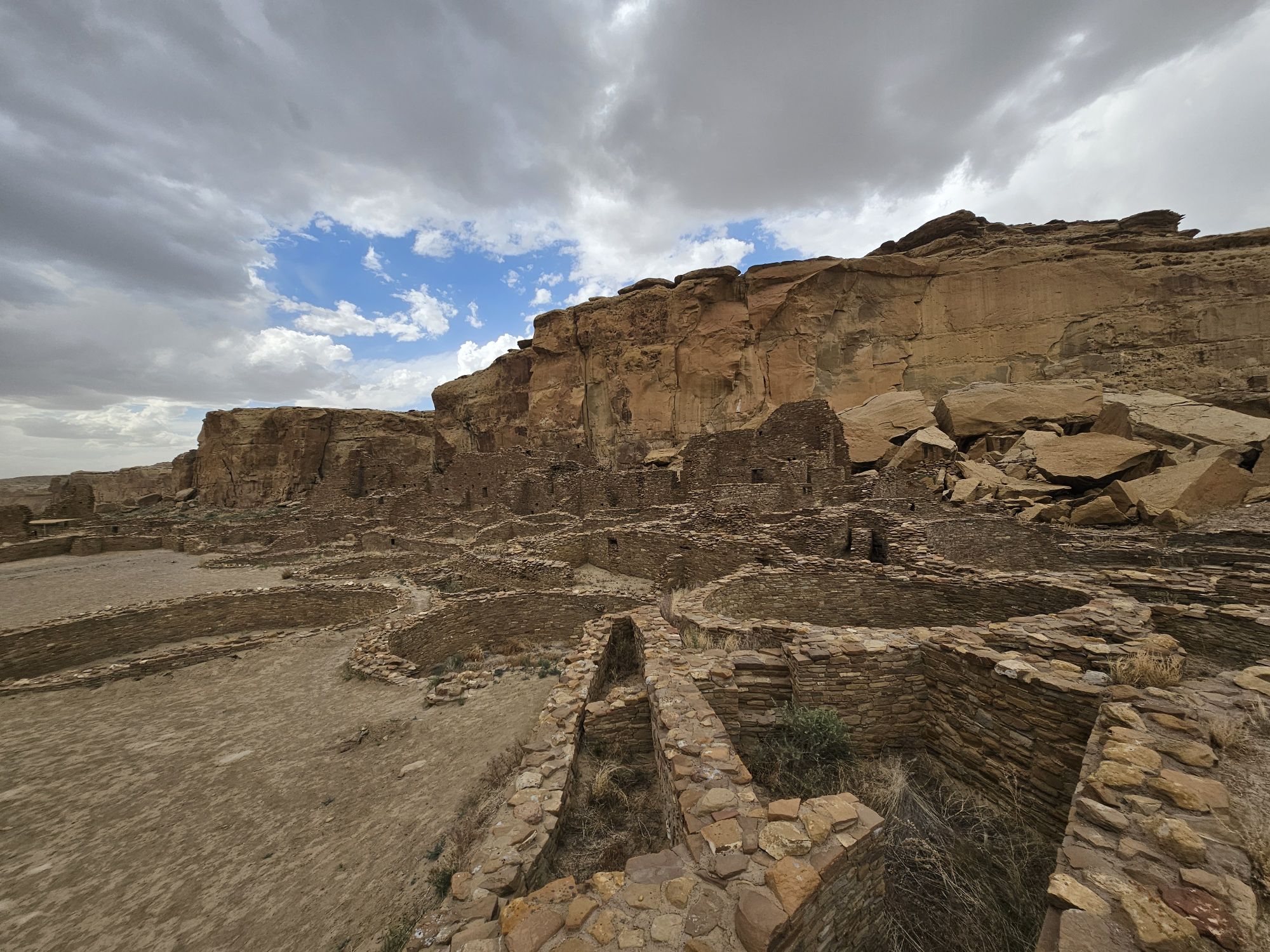
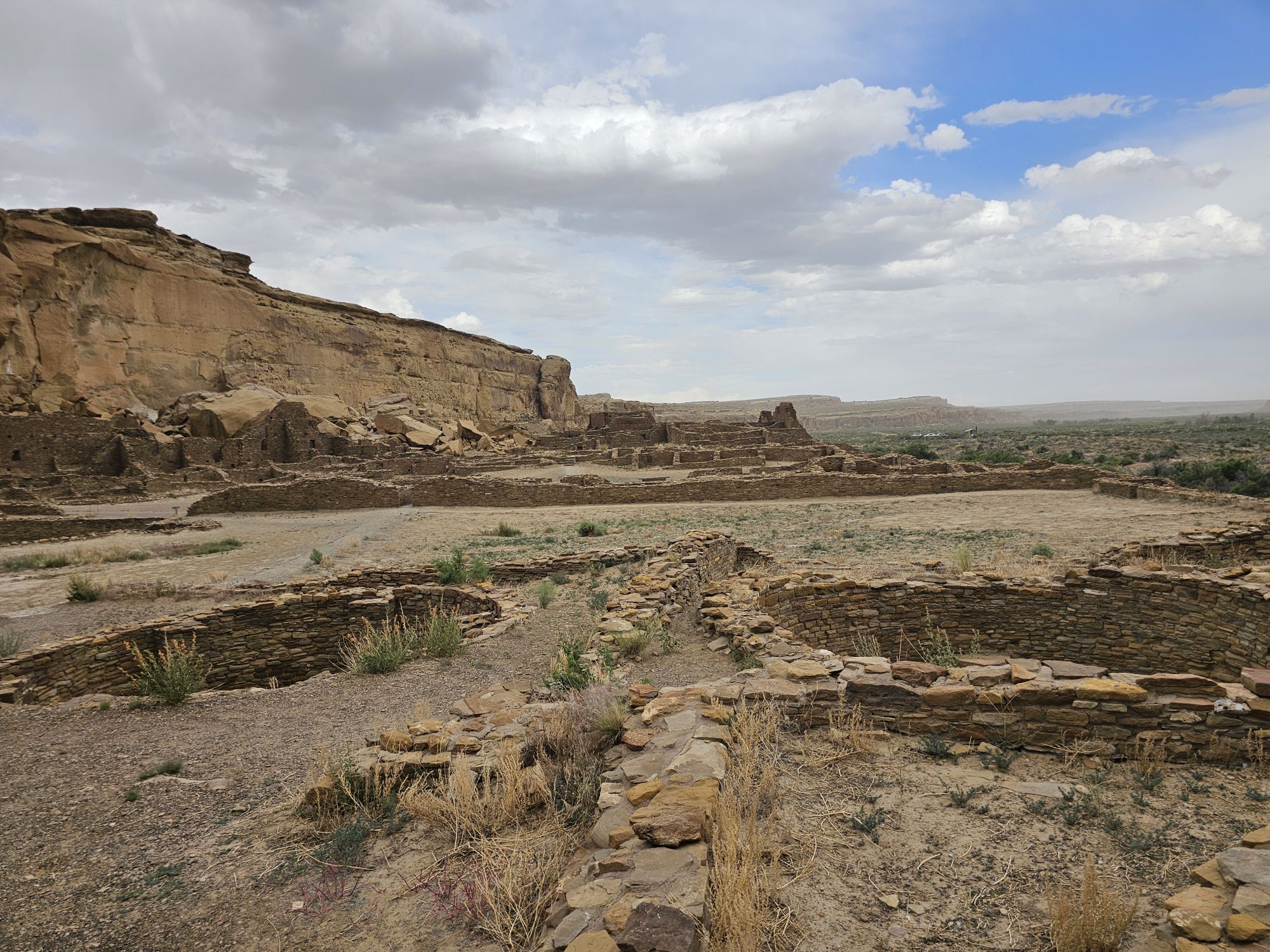
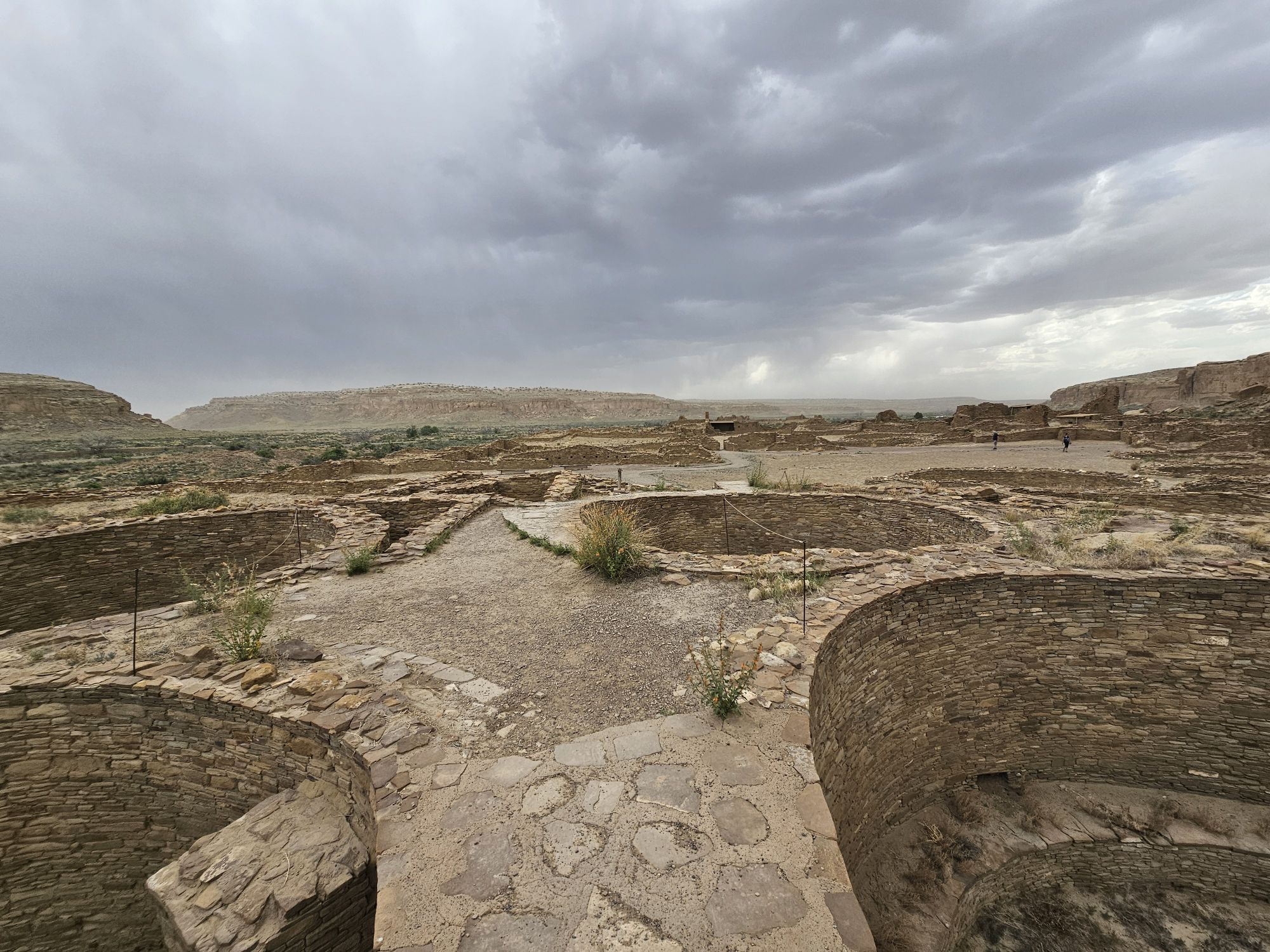
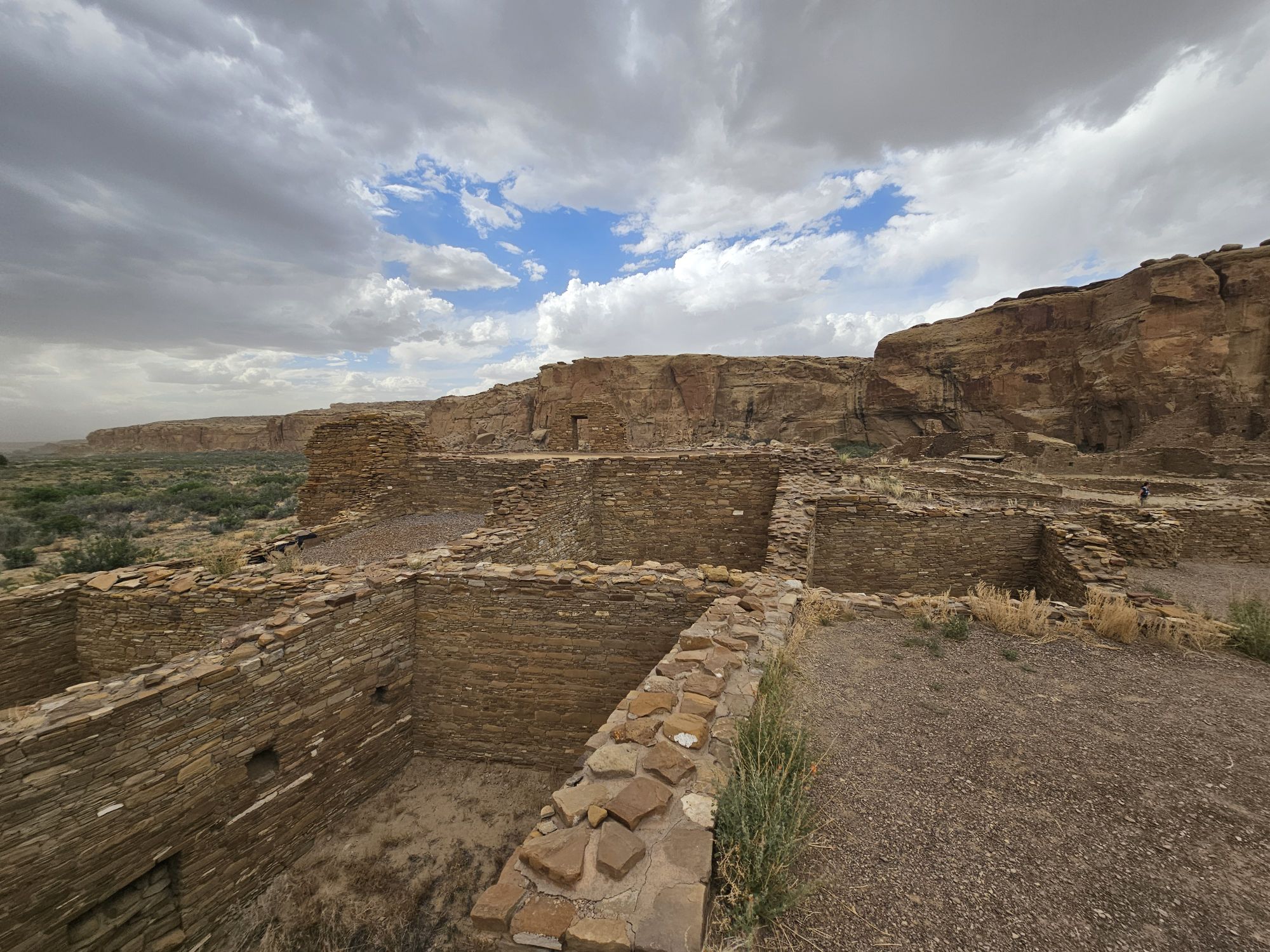
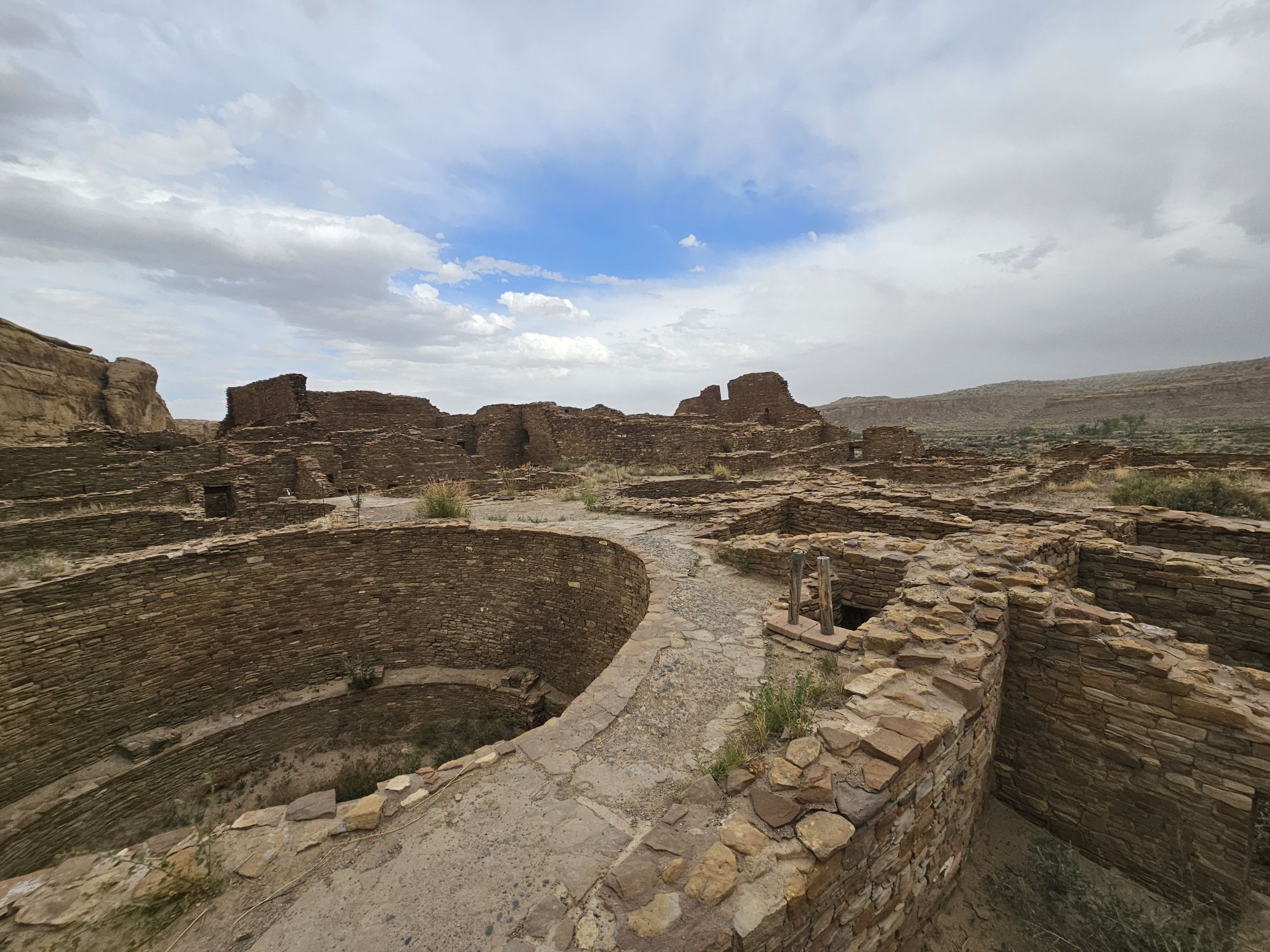
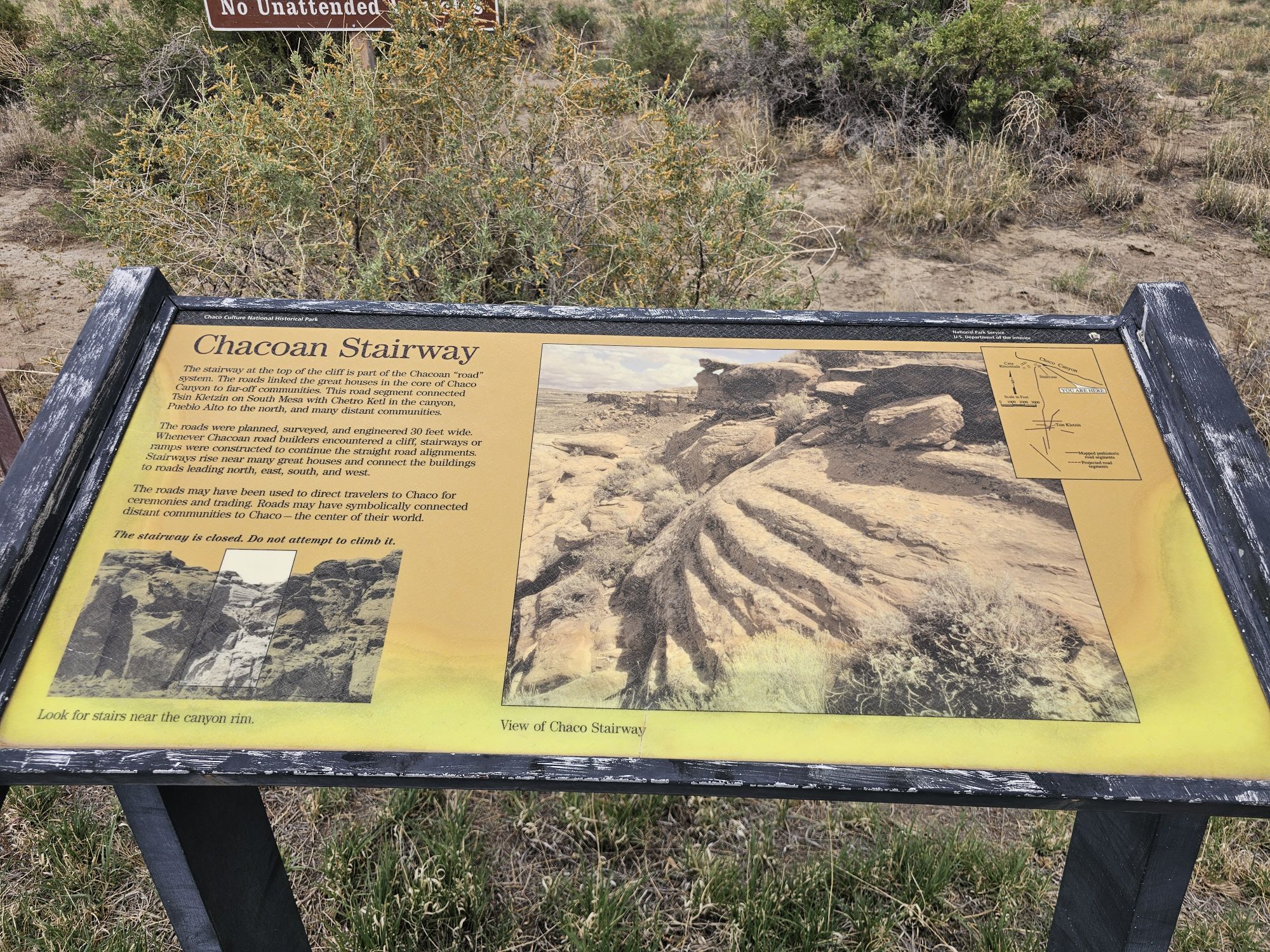
There were other things to do and see but I was concerned about the wind, which at this point was quite strong…and carrying sand, not pleasant, and the clouds coming in. I surely did not want to get caught in any kind of rain on the road getting out of here. But, the last thing I saw and will mention is the ancient Chacoan roads. This entire area was connected though a very functional and extensive road system. In Chaco Culture the roads are not easily seen other than from above, however, at many of the sites the “stairways” can be seen. Essentially these people built very straight roads and did not like curving or going around, so when it came to elevation changes they essentially built stairways down the cliffs to continue the road in a straight fashion! I stopped to check one out as the weather came in and did it in a hurry and got on my way. It was quite difficult to see, but what cool history!
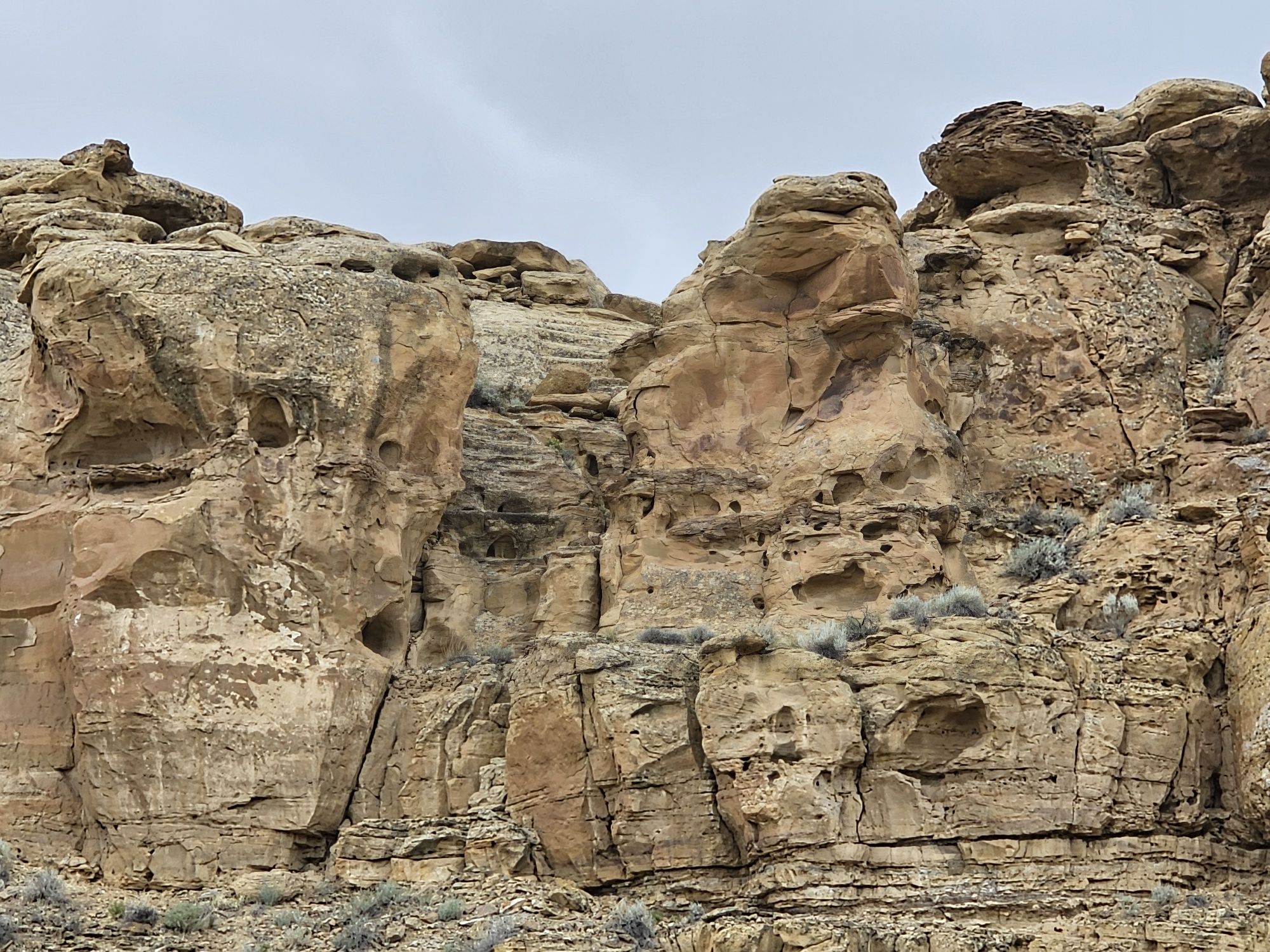
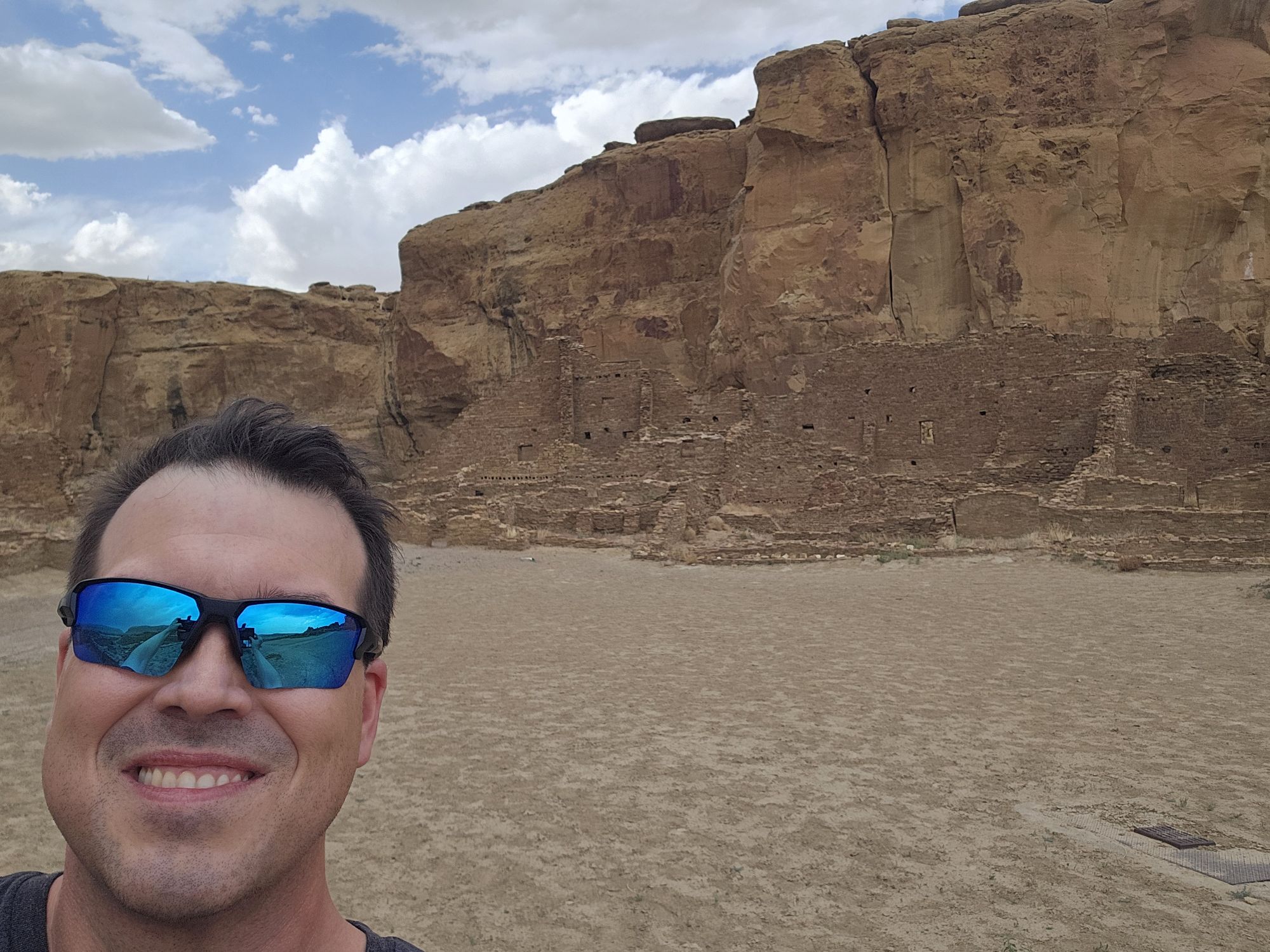
This was a very incredible place to visit if you can make it. Coming in I expected a canyon and some ruins. It was that and so much more! The history in this place is outstanding. You should definitely go, 100 percent! I only spent 2 hours here and could have easily spent an entire day, if not more. Next up will be Mesa Verde National Park!
 The Parks Adventurer